Three's a Charm in Triangle Pose
Sara Villamil | APR 7, 2024
asana
triangle
trikonasana
yoga
triad
Three's a Charm in Triangle Pose
Sara Villamil | APR 7, 2024
Hello, you!
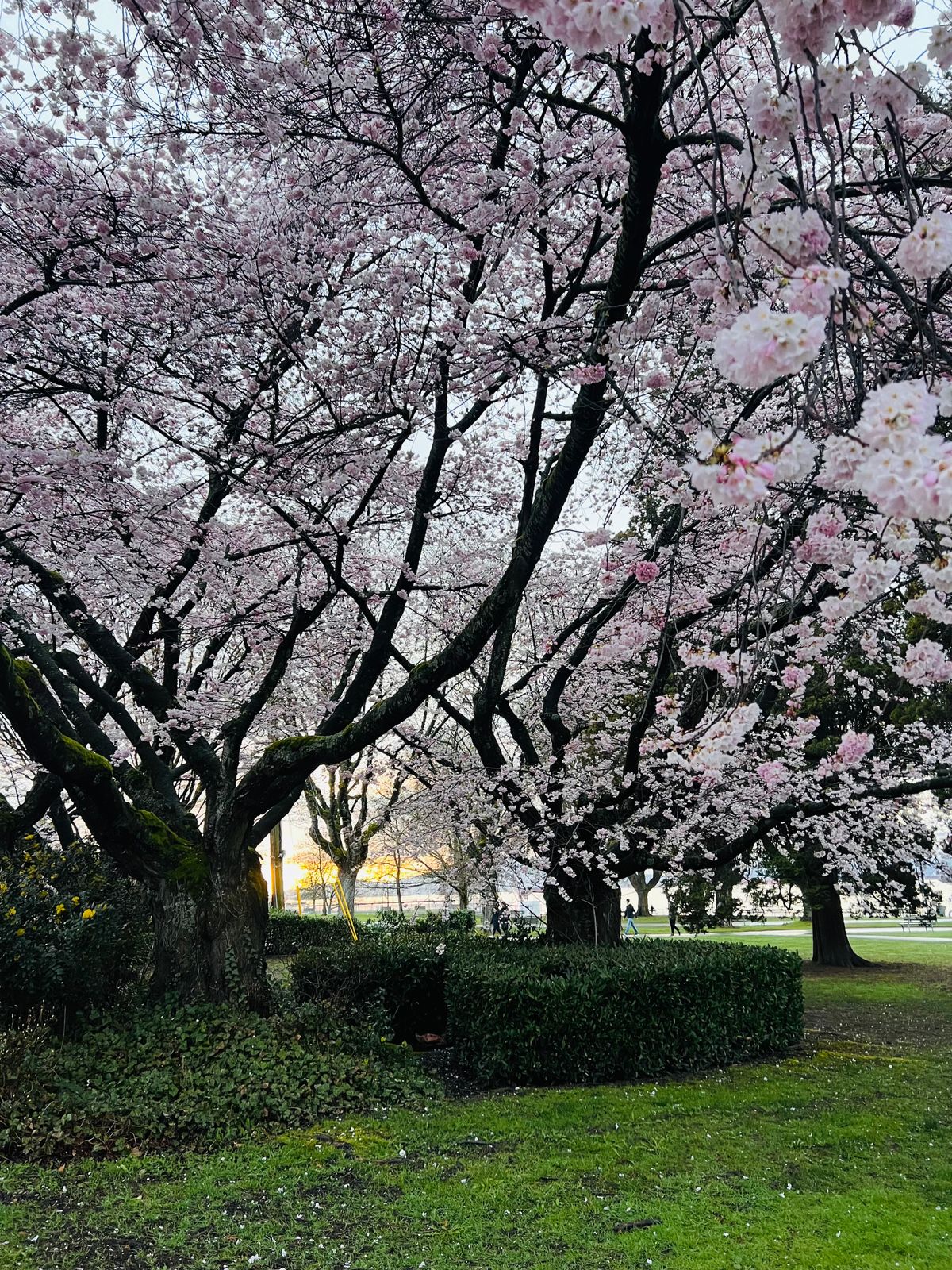
I hope you’re keeping well and managing all your things. I am just back from a weekend in Vancouver with my husband and my beautiful cousins, and my cup is overflowing. Calgary friends, I don’t want to tell you that the cherry blossoms were out, but the cherry blossoms were out, and all other buds were kaleidoscopes just waiting to burst.
But, as a student commented on Monday night, the snow is beautiful and peaceful too. So, if you’re still knee-deep in it, remember it’s okay to take a little more time to bud and blossom.
You might think of your asana practice this way: Sometimes, our postures feel like small, new, shaky little buds, and sometimes, they feel like giant, spacious, explosive blossoms. As our practice grows and our experience with asana expands, discoveries and sensations are uncovered, often making us feel like we’re experiencing the posture for the very first time.
I get that feeling in Triangle Pose, Trikoṇāsana, and there must be something in the water because students have been asking about this posture more than ever. What an interesting and complex position it offers for the body, mind and spirit, a symbolism in which it is steeped.
The asana is connected to the Hindu Trinity of Brahma (creator), Vishnu (preserver), and Siva (destroyer), the Trimūrti. Three separate divinities that work together to maintain universal order, symbolizing the harmony we seek in life and yoga practice. Trikoṇāsana has also been documented to represent past, present, future and other sacred triads.
This posture will certainly show up in most of your yoga asana classes. Considering how often we find ourselves in this shape, one might assume it gets easier with time, perhaps even (cough) redundant. Conversely, as it becomes more accessible, familiar and understood, the real curiosity begins. It seems like every single time I practice this posture, I come up with some new sensation, some new piece of information that makes me think, aha, I have finally cracked its code, but that's quickly washed away the next time.
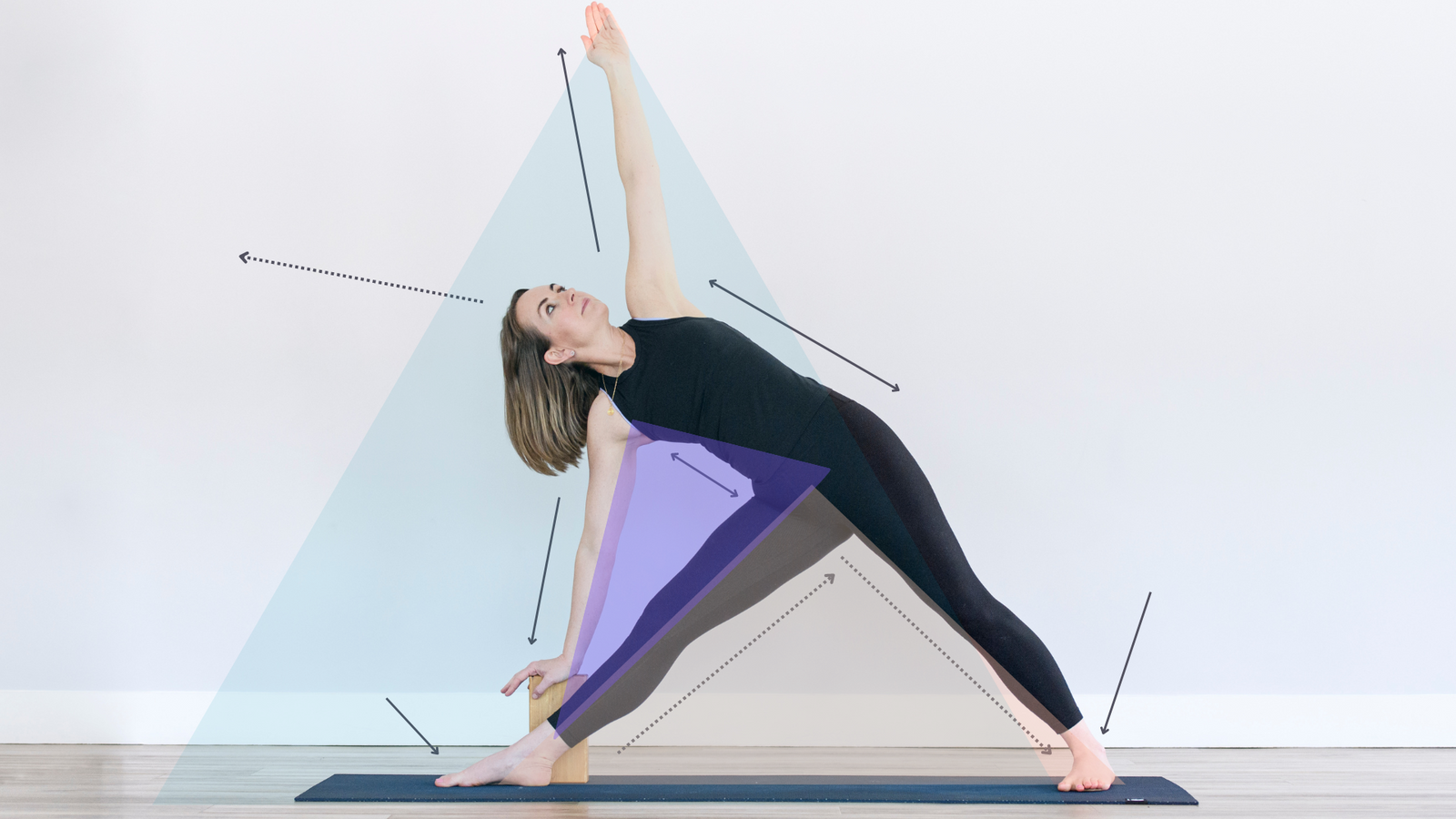
The actual triangles created in the body in this asana have always helped me envision the energetic lines needed to make the shape. Allow me to scratch the surface with some of my ever-evolving favourite cues for this posture:
Places you don't want to feel discomfort in this posture include:
Use blocks, benches and chairs to make this posture more accessible. There is no shame in bringing the floor up to meet you. Try coming into it in different ways. I remember being shocked when a student with incredible mobility and strength told me her favourite way to do Triangle was with a chair because she felt much more stable in her pelvis.
Play with this posture, have fun with it, breathe, and ask for help—it shouldn't hurt!
Sara Villamil | APR 7, 2024
Share this blog post